How much carbon does a piece of ceramic art contain?
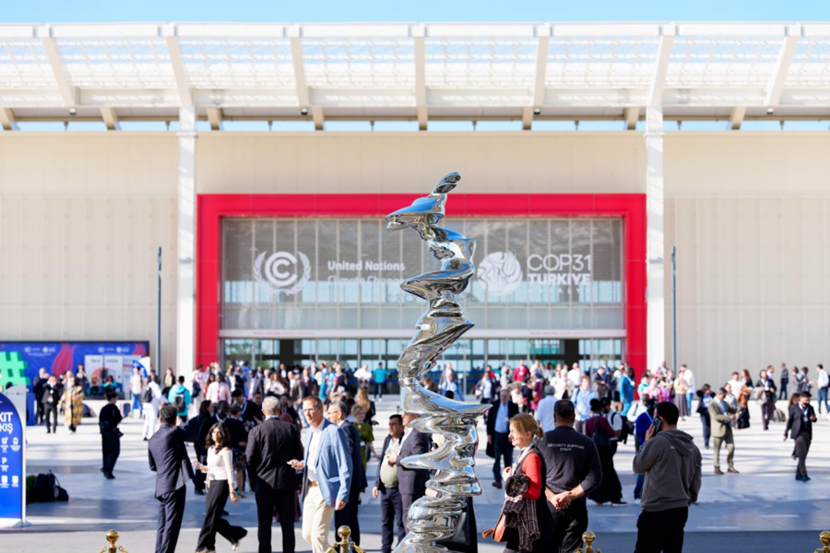
On 17 November, the China Pavilion at the 31st session of the Conference of the Parties to the United Nations Framework Convention on Climate Change (COP31) in Antalya, Türkiye, welcomed guests from around the world. Wang Yan, associate professor from University of Chinese Academy of Sciences (UCAS) and head of the Guoke Workshop (UCAS Science and Art Lab), opened with that question.
The answer lay in a low-carbon record card designed by UCAS students.
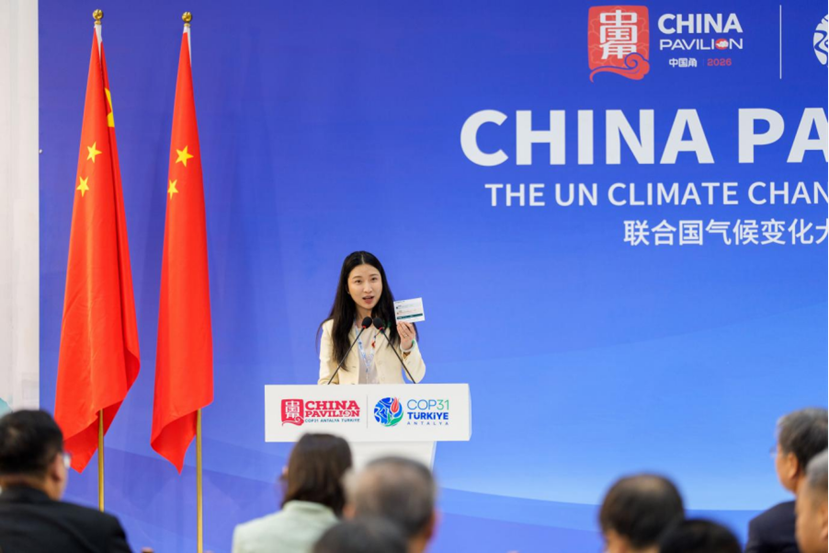
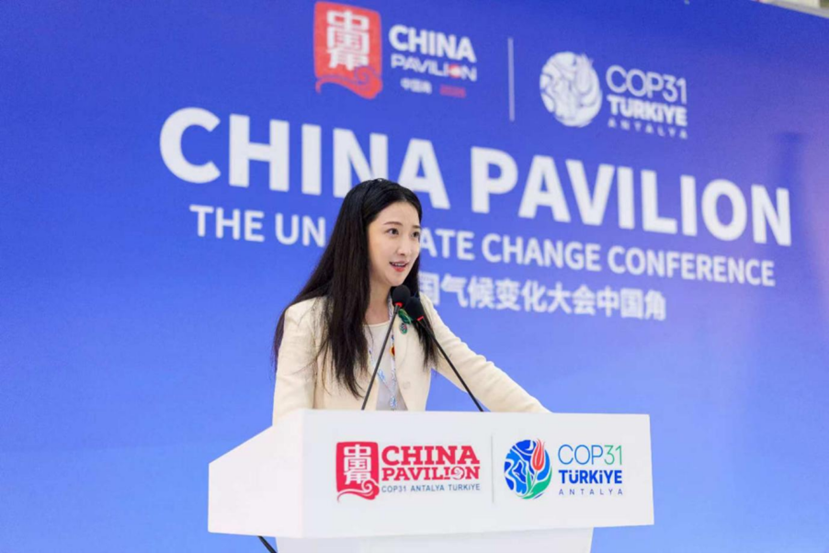
In a dialogue spanning policy, science and culture, Wang Yan’s remarks filled a critical gap by bringing in education.
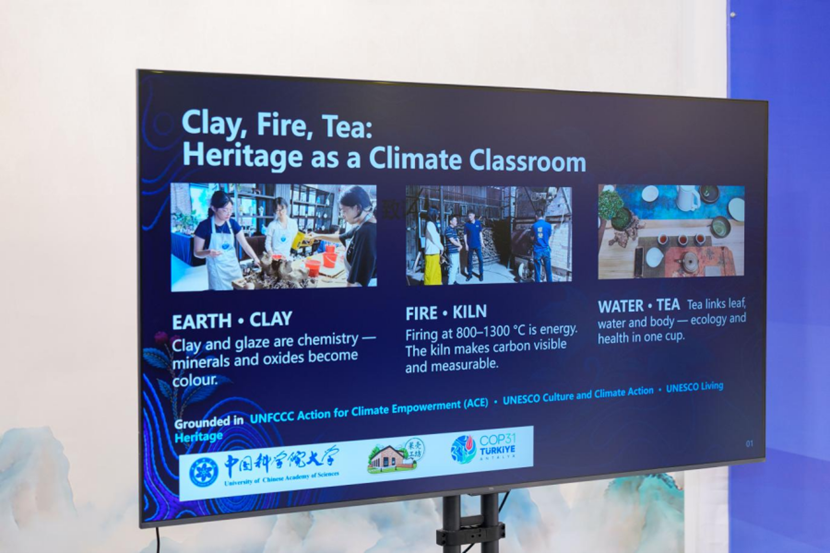
Clay, Fire and Tea: Climate Education in the Everyday Classroom
“Our students will become the scientists and engineers who design future climate solutions,” Wang Yan said. “Education and culture are not an ornament to climate policy but the means by which people actually change.”
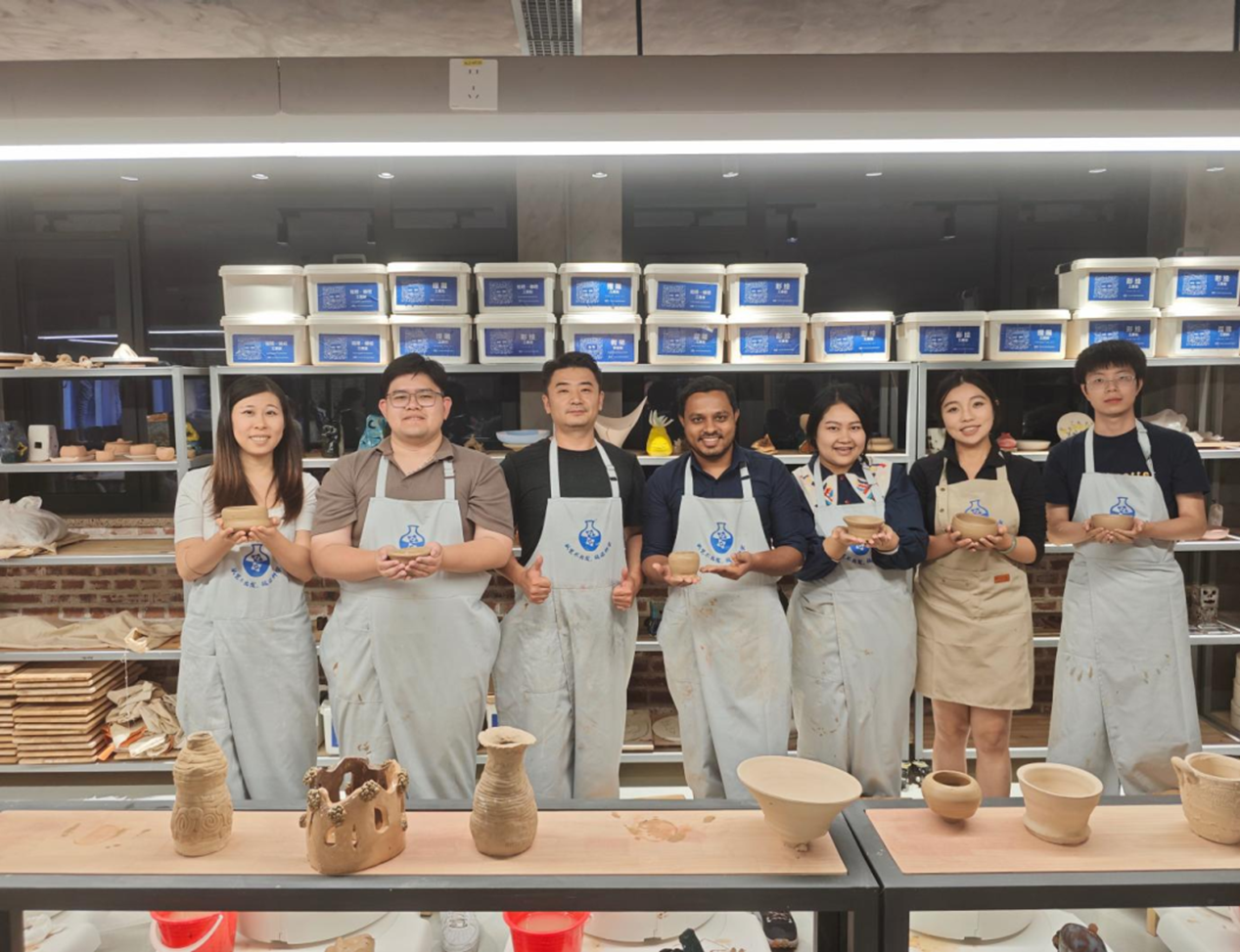
The Guoke Workshop has three special “teachers”: clay corresponds to chemistry, fire to energy (kiln temperatures reach 1,300 °C), and tea to ecology and health. Scientists, artists and inheritors of intangible cultural heritage teach side by side. Students shape and fire their own pieces, and each work is then entered into a “carbon ledger.”
In its first year, UCAS Science and Art Lab has offered five practice-oriented courses, drawing more than 600 student attendees and putting over 200 student works on public display.
Climate education has thus become part of everyday life for UCAS students, the scientists and engineers of the future.
A Single Card: Students Exploring Carbon Reduction
One of the headline case studies in the report is the Low-Carbon Record Card for Ceramic Art Creation, designed by the students themselves. It is no substitute for rigorous carbon accounting, but it lets students connect their own work with carbon emissions for the first time.
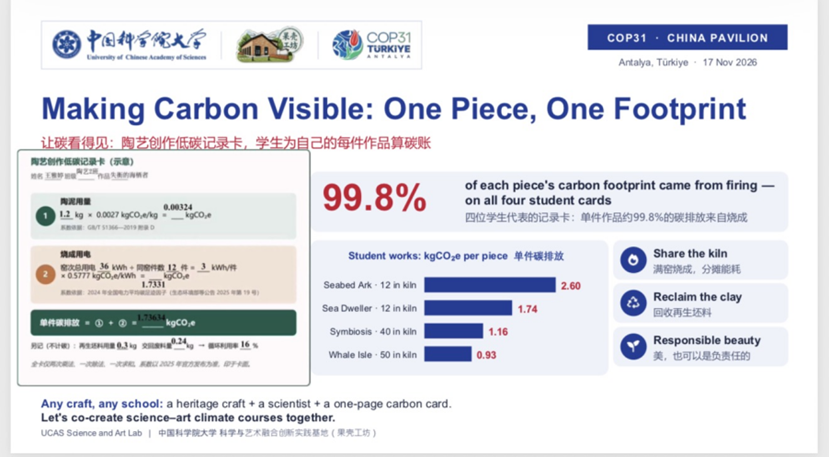
Four students, four ocean-themed pieces. By their own estimates, roughly 99.8 percent of the carbon comes from the kiln firing, not the clay. The fuller the kiln, the lower the carbon footprint per piece, a difference of nearly threefold across the four works.
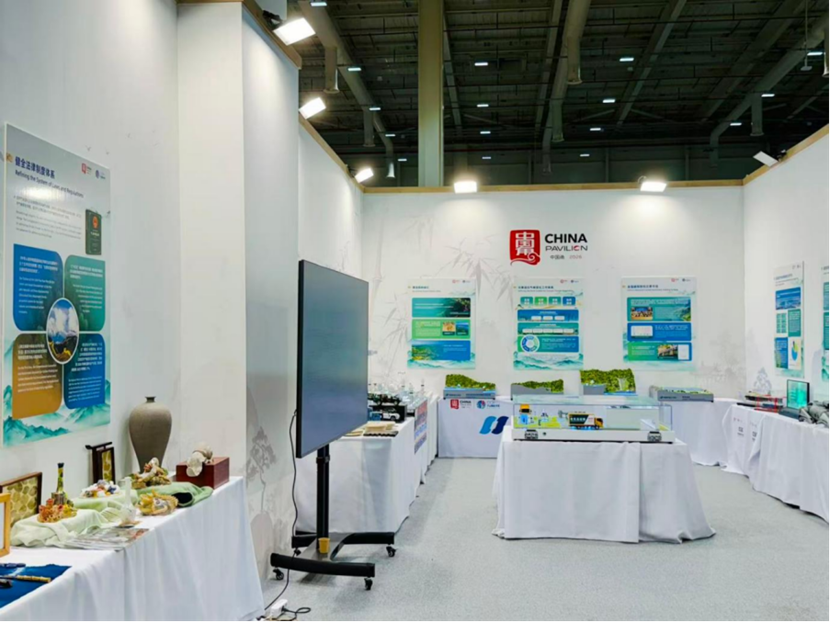
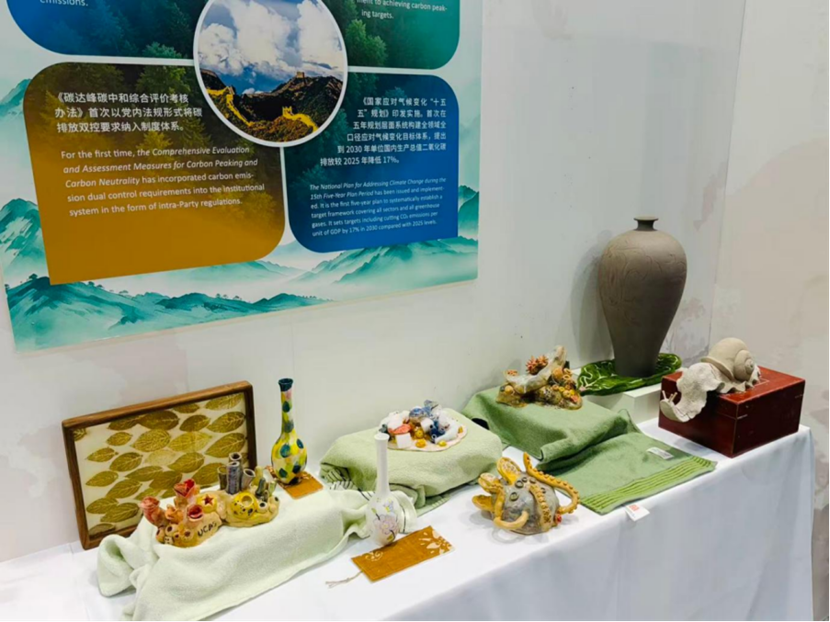
Ceramic works by UCAS students on display at the China Pavilion.
The students then began working out how to cut those emissions: firing full kilns, reclaiming clay, and designing with the carbon footprint in mind.
Beauty can be responsible, too.
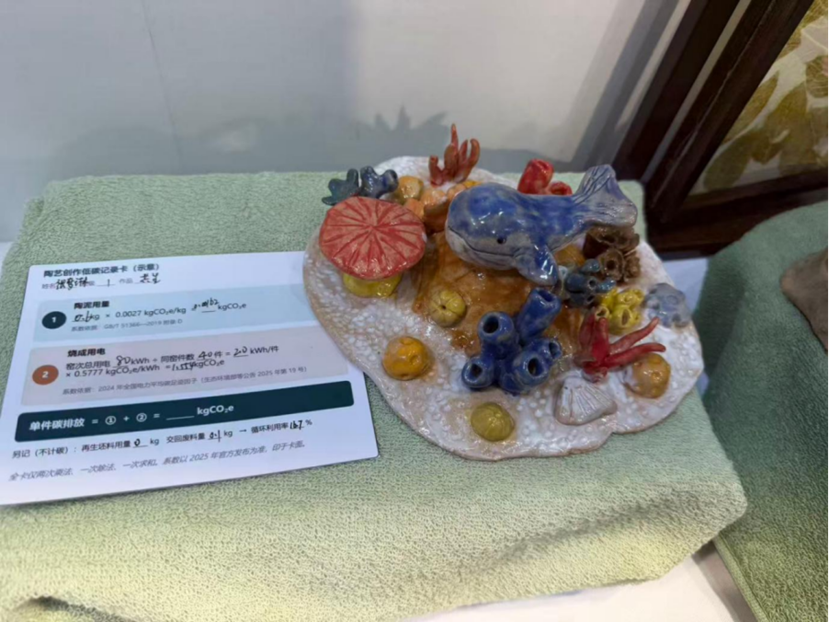
A Low-Carbon Record Card completed by a student
One Craft, One Climate Classroom
A local craft, a one-page carbon record card, and a group of scientists, artists and young students. That is all it takes.
“From Jingdezhen porcelain in China to İznik tiles in Türkiye, every craft on the intangible cultural heritage list can become a climate classroom.” Wang invited partners to join in exploring a model that pairs local classical arts with modern science and technology.
As the event drew to a close, young representatives from Türkiye, Bangladesh, Costa Rica and other countries walked onto the stage to the sound of Dong grand song, sharing the ancient wisdom their homelands have long used to meet climate challenges.
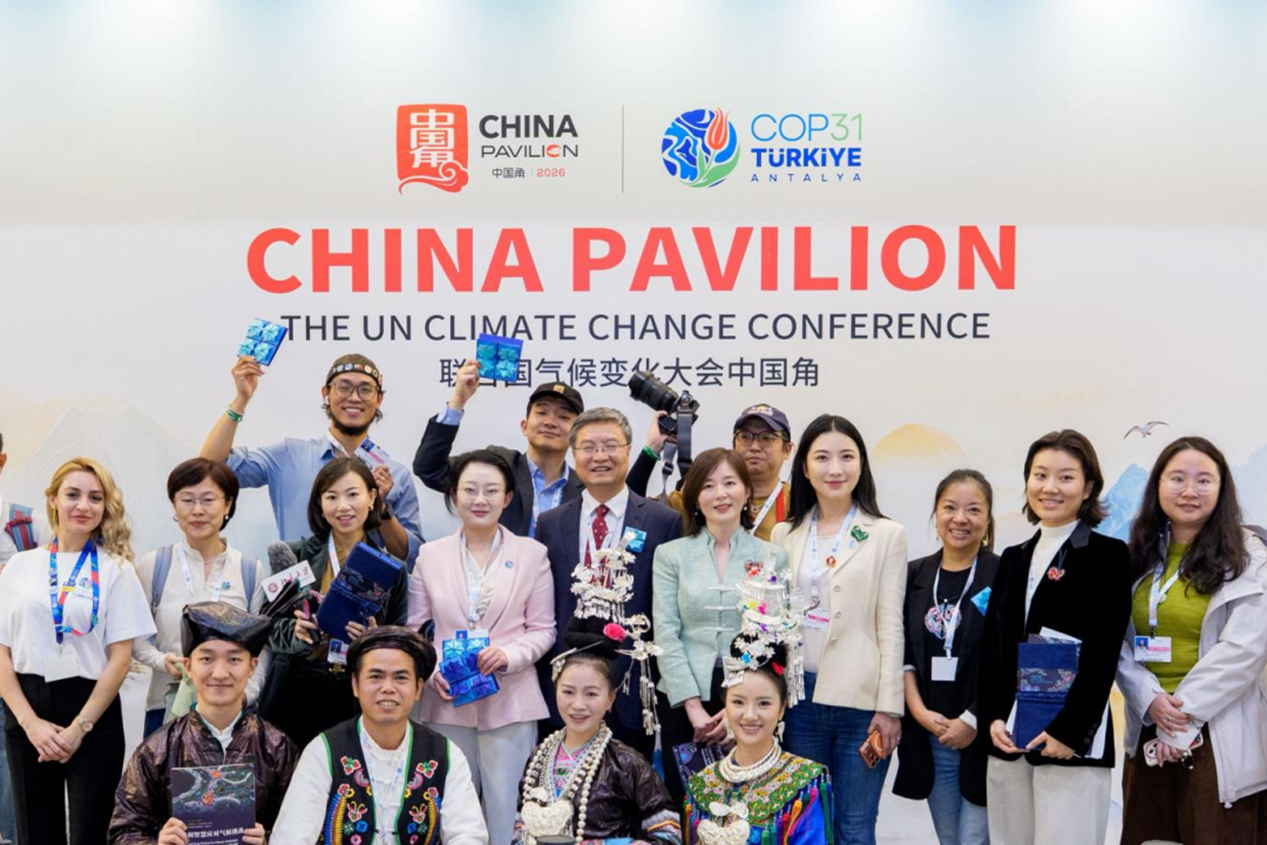
Young representatives share the stage with singers from Dong ethnic group.
From a classroom at the Guoke Workshop to the podium of the UN climate conference, young people are writing their own climate answers, with their own hands.
You are welcome at the Guoke Workshop by the shores of Yanqi Lake: shape some clay, brew a cup of tea, and meet science with your hands.
About the Guoke Workshop
The Guoke Workshop, officially UCAS Science and Art Lab, sits on Yanqihu Campus and opened in November 2025. Guided by the idea of “starting from art, reaching science,” the lab uses intangible cultural heritage crafts such as ceramics, tea, paper, minerals, flowers and incense as vehicles for engaging the university's strengths in Chemistry, Materials Science, Geoscience, and Plant Science. Its courses include Ceramic Art Innovation and Practice (from a Science-Art Integration Perspective), Tea and Health, Ceramic Sculpture: Materials Science and Creative Practice, Chinese Ceramic Culture and Appreciation and Kombucha Transformation and Song-Style Tea Whisking. Classrooms, workshops and galleries combine teaching, making and exhibiting in one space. Works by faculty and students have been shown at the Beijing College Students Art Festival and the UN Climate Change Conference. The lab also supports new student quality education and art psychotherapy, and is a key platform for interdisciplinary practice, aesthetic education and international exchange.

